
Keeping the Hollow
Protection is a condition,
not a decoration.
A lantern only protects when somebody tends it. A fence only protects what it encloses. This page covers what the game does today.
01 / Read the building
Every plot has two numbers.
Inspect a home or workplace and the game shows its Deer and Hostiles protection. Both run from 0 to 5 and both are local: they describe that plot, not the village. A neighbour with a lantern says nothing about the building you are looking at.
A deer visit reads the Deer score directly: the higher it is, the less food the herd takes. A raid from another village is fought out on your actual layout instead, so the Hostiles score is a guide to where cover is thin rather than the result of a fight. It is worth checking the buildings that hold your food first.

02 / What protects what
Eight ways to raise a score.
- A Village Wall unlocks at village level 4, and you draw it: press at one corner, drag to the opposite one, anything from fourteen to sixty-four metres a side. The price follows the length of the line, so a sixteen-metre square is the 120 timber and 40 stone it always was. Everything inside counts 3 against deer and 3 against hostiles, and each rebuild, first in limestone and then in cast concrete, adds one to both. In a raid the gate stays shut and it is still the way in: raiders come to it when it is anywhere near, and break a length of wall instead only when it is not, which costs them more. Drawing the wall longer shelters more ground and takes longer to raise, but it is no harder to get through — a wall is a run of pieces, and one piece is one piece. Rebuilding it is what makes it hard.
- A soldier house is a staffed protection post as well as the place soldiers train. While its wardens are at work, the Patrol Barracks adds 1 against hostiles within 10 metres, the Barracks 2 within 12 metres and the Company Barracks 3 within 16 metres. Each one also raises the roster: 2, 4 and 7 more soldiers on top of the 6 a village keeps without one, up to 14.
- A Deer Enclosure protects what stands inside it, and only that. It is the cheapest protection in the game at 24 timber and the right answer for a garden.
- A Watch Platform adds 2 against hostiles and 1 against deer to every building within 14 metres, but only while an eligible warden has arrived and is working. An empty platform adds nothing.
- A Ward Lantern adds 3 against hostiles within 12 metres. It needs a keeper at work, a connection back to the Hearth through the lantern network, and essence to burn. Miss any one of the three and the light is only light.
- An Arrow Tower unlocks at village level 3 and costs 40 timber and 30 stone. With a warden at work it adds 2 against hostiles and 1 against deer within 12 metres, and it shoots: 11 damage a little over once a second, at anything within 12 metres.
- A Ballista Post is the heavy one, at village level 4 for 60 timber and 90 stone. A warden at work adds 3 against hostiles within 14 metres, and its bolt carries 16 metres for 26 damage every three seconds, splashing anything within two and a half metres of where it lands.
- A Moss Pylon is the one that keeps working when nobody is awake. It needs no worker at all, only an essence every two minutes, and for 30 stone and 12 essence it adds 1 against hostiles within 9 metres. It deals no damage: it slows anything within 9 metres to two fifths of its speed, which gives every other defence more shots before a raider arrives.
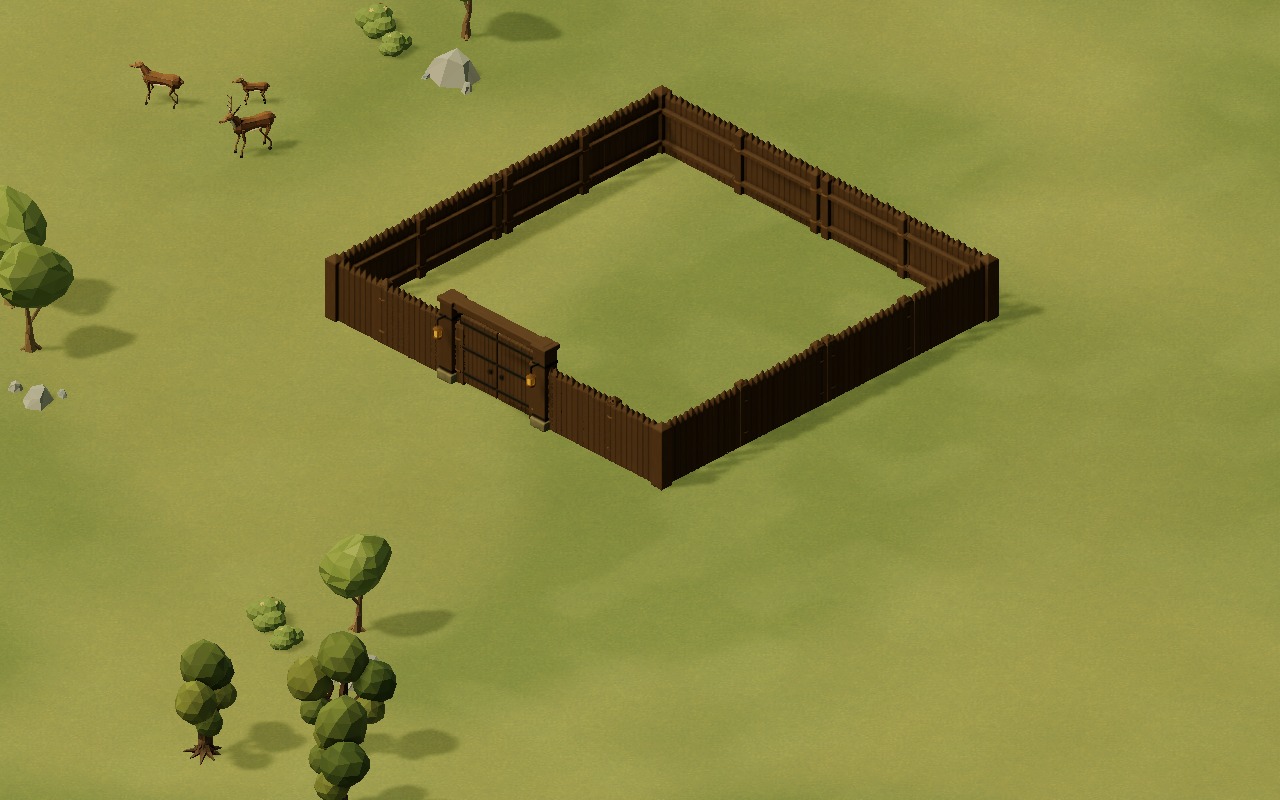 Timber palisade
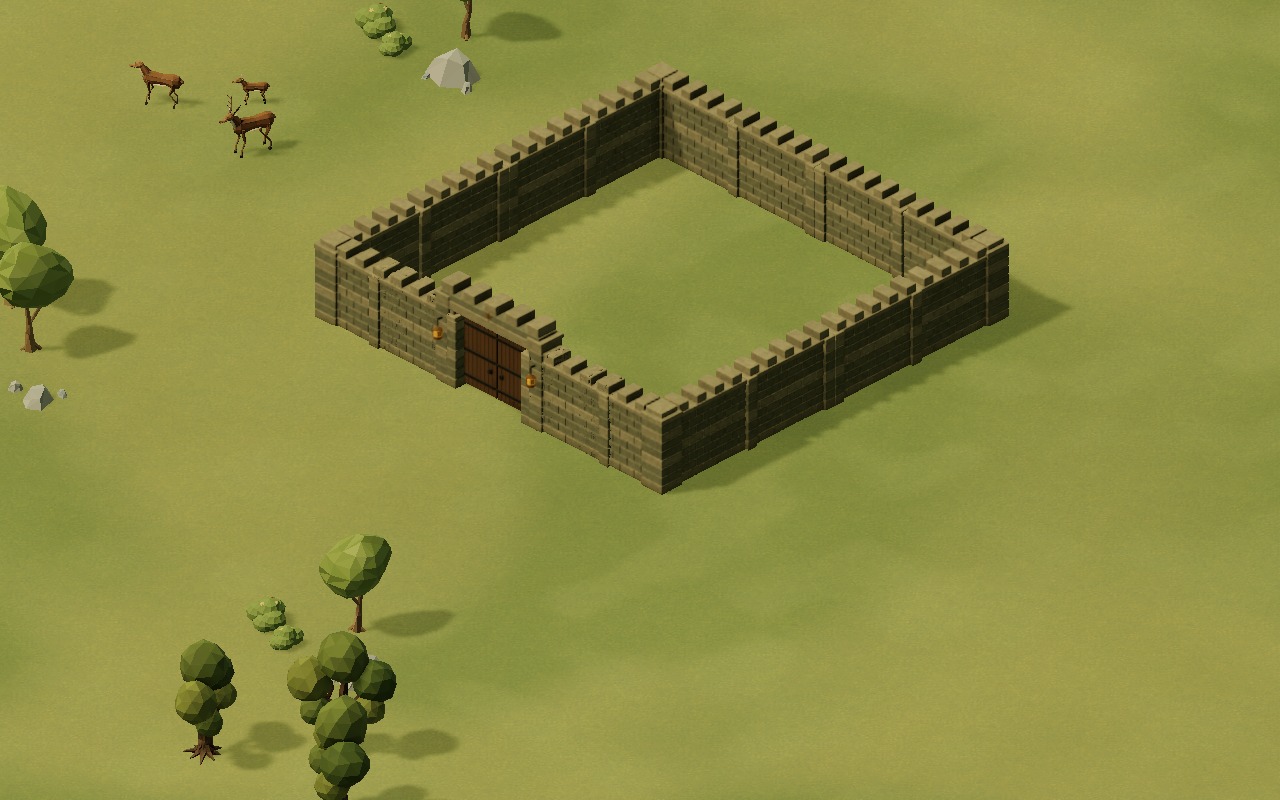 Limestone
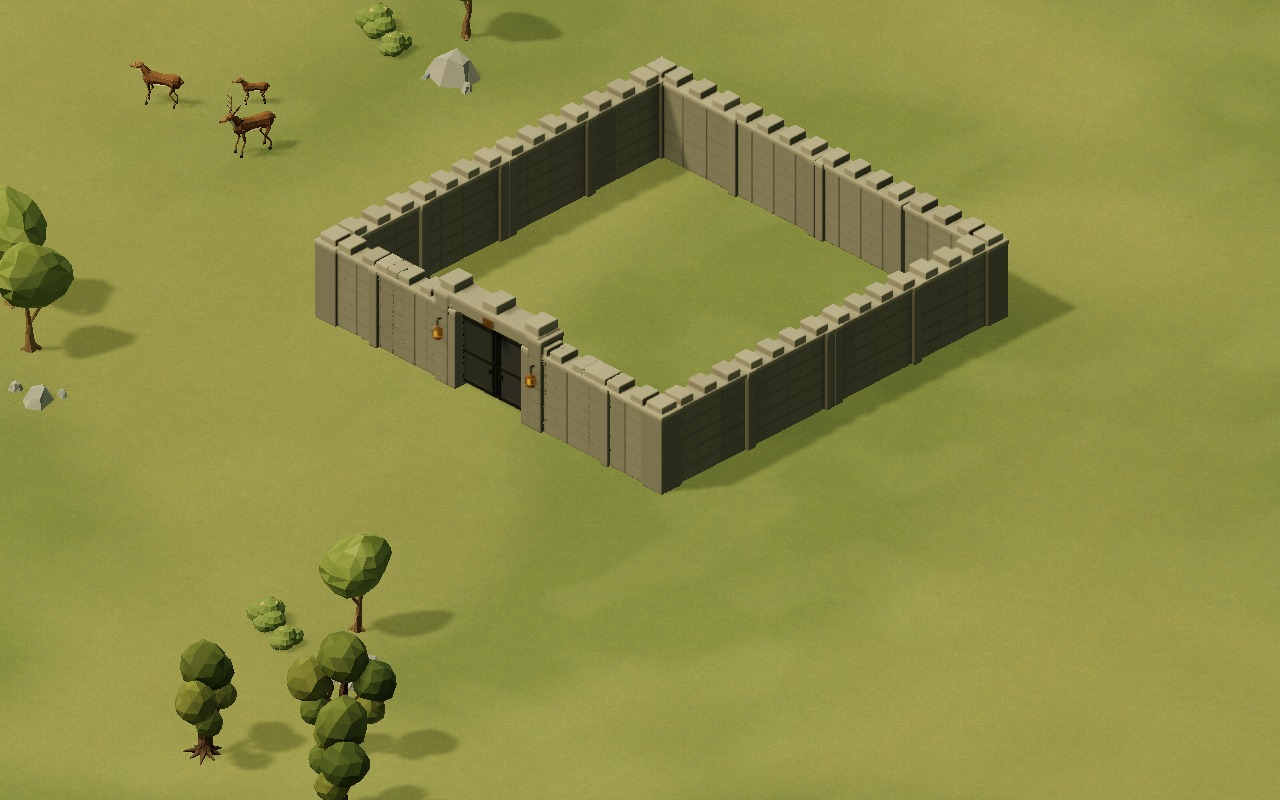 Cast concrete
Homes help too. A larger home adds a little against hostiles to its own plot: a Family Cottage adds 1 and a Hearth Lodge 2, while a Moss Hut adds nothing.
Look up a protection building →03 / The edges of the map
Raider camps come and go.
A camp settles at the edge of the map a few minutes into a village’s life and stays for up to three quarters of an hour. Camps do not attack your village. They wait at the edge with their loot until your soldiers come for it.
A camp is held by Raider Scouts and Raider Brutes, more of them at the higher tiers. An expedition that clears it brings home its timber, stone, food and lantern essence, and the camp is gone from the map.
04 / A small militia
Recruiting takes a staffed post first.
Open the World panel to see your soldiers, the camps nearby and your expeditions. A village cannot recruit at all until a barracks or a watch post is built and staffed, which is the game’s way of saying that defence starts with a building and a person, not with a roster. Without a barracks a village keeps up to 6 soldiers.
Choose a settled adult.
Recruiting moves a resident out of their workplace, so you are trading production for protection. A builder in the middle of a job cannot be recruited.
Pick a class and pay for the equipment.
A guard costs 10 food, 5 timber and 4 stone and carries sword and shield. An archer costs 10 food and 12 timber and fights at range. Both train for 45 seconds before they can be sent anywhere.
Drill them when they are idle.
A drill costs 6 food and 4 timber, takes 60 seconds at home and grants one point of experience. Two drills take a soldier to level 2, and four more to level 3, the highest.
A soldier who loses a fight recovers rather than dying, and one you no longer need can be returned to ordinary village work.

05 / Going out
An expedition is a round trip.
Send a party of soldiers at a camp and they march, fight and walk home. The march takes real minutes, the battle is resolved by the village service from the soldiers you actually sent, and the result is reported when they return.
Winning brings the camp’s loot into your storage. Losing brings your soldiers home hurt. Two expeditions can be away at once, and a marching party can still be recalled before it reaches the target.
Every victory adds valor to the village’s record: 10, 15 or 20 for a cleared camp depending on its tier, 20 for a won rival raid and 15 for a rival raid your village beats off.
06 / Other villages
Rival battles are something you opt into.
A village is private until you choose otherwise. Sharing it publicly puts it in the world directory where other players can visit and look around. Turning on rival battles is a second, separate choice, and it is the one that lets other villages send expeditions at yours.
When another village sends an army at yours, you are told who is coming, what they bring and when they arrive. The fight is played out on your village as it stands: the wall and its gate block the way, staffed watch platforms and ward lanterns with a keeper and essence shoot back, and rested soldiers at home stand with them.
- A raid shield covers your village for 30 minutes after a rival raids it, so nobody can chain attacks on you.
- A cooldown of 10 minutes sits between your own rival expeditions.
- Losses are capped. A raid that gets through takes at most a fifth of the timber, stone and food you hold above 50 of each, and no more than its soldiers can carry. It can ruin up to two buildings, which stop working until they are repaired for 5 timber and a minute of builder work. It never removes a building or knocks down a wall.
Visitors can only watch. A spectator cannot place, pay, recruit or start anything in your village.